Stand in bright daylight, smile, then relax your face. Do the lines bracketing your mouth stay etched like parentheses, or do they soften and fade? That simple mirror test often decides whether botox injections or fillers will give you the result you want. I have this conversation every week with patients who point to their “smile lines,” a catchall term that covers dynamic creases from movement, deeper folds beside the nose, and the downturned corners that make a face look tired. A precise plan requires more than naming the line. It requires understanding which structures are creating it and choosing the right tool for each layer.
What “smile lines” actually are
Most people mean nasolabial folds and marionette shadows when they say smile lines. The nasolabial fold runs from the side of the nose to the mouth corner. The marionette area extends from the mouth corner toward the chin. But three different forces can make them appear:
- Dynamic motion from muscles that pull during smiling, frowning, or speaking. Volume loss in the midface and perioral fat pads. Skin laxity and textural change from age, sun, and collagen decline.
Botox treatment targets the first factor. Hyaluronic acid fillers address the second and, to a degree, the third by restoring structure and lifting shadows. You often need a blend.
What is Botox, and how Botox works for lines around the mouth
Botox is a purified neurotoxin that temporarily relaxes specific muscles. Think of it as a dimmer switch for overactive facial muscles. When carefully dosed, it softens lines formed by movement. The classic zones are botox for forehead lines, botox for frown lines, and botox for crow’s feet. Around the mouth, we use precision botox injections to quiet small muscle groups that tug the lips downward or bunch the chin skin.
Here is where botox for smile lines gets misunderstood. Botox does not fill a crease. It prevents the repetitive folding that imprints the crease. If your parentheses are mostly visible only when you smile, or if your mouth corners pull down sharply with expression, neuromodulation can help by relaxing the depressor muscles. If the crease is present at rest, the problem is usually volume and structure, which is filler territory.
The decision tree I use in consultation
I start with three observations. First, I watch you speak and smile from profile and straight on. Second, I pinch test the fold to see whether it effaces with gentle lift, which suggests volume loss. Third, I check skin quality and elasticity. If a crease fades completely when I lift the cheek, filler works. If the fold deepens with a strong downward pull from the mouth corners or if you have an uneven smile from muscle imbalance, limited botox can help. Many patients benefit from both, sequenced correctly.
The botox consultation process also includes a brief review of dental occlusion, history of orthodontics, and parafunctional habits like clenching or teeth grinding. A strong masseter or tight mentalis can exaggerate lower face lines. For some, masseter botox for jaw slimming or botox for teeth grinding and botox for TMJ reduces overall facial tension and softens a clenched look, indirectly improving smile line dynamics.
When Botox helps the “smile line” story
There are four specific mouth-adjacent muscle patterns where botox for facial harmony shines.
The downward corner pull. The depressor anguli oris (DAO) muscle drags the mouth corners south, creating a frown at rest and deepening marionette shadows. A few units of botox for downturned mouth can lift the corners a few millimeters and reduce the fold’s shadow without freezing your smile. I test with a gentle counterpull to confirm the DAO is the driver. The dose is modest, often 2 to 5 units per side, mapped along the mandibular border. Too medial risks lip weakness. This is where advanced botox techniques and anatomy based placement matter.
The pebbled chin. The mentalis muscle bunches the chin skin into dimples and pushes the lower lip upward. Botox for chin dimpling smooths the pebbled texture and reduces the upward force that deepens marionette lines. Doses range from 2 to 8 units total depending on chin strength, with injection mapping at two points. It often pairs with a touch of filler at the chin crease for full correction.
The gummy smile and lip curl. If your upper lip flips under when you grin, or your gums show prominently, the elevators of the upper lip are overactive. A conservative botox lip flip or botox for gummy botox near me smile can balance that pull. By quieting the levator muscles, the lip rests slightly fuller and the nasolabial area looks less strained. The goal is subtle. Overdoing it can affect enunciation or sipping from a straw.
The asymmetrical smile and nostril flare. Uneven smile lines sometimes come from asymmetrical muscle strength. Small adjustments with botox for facial asymmetry or botox for uneven smile can even out the pull. For those who flare the nostrils aggressively when they laugh, a tiny dose for nostril flare can reduce the scrunch that creases the upper fold.
These are dynamic problems. When I see them, I reach for botox first, then reassess whether a filler needs to address remaining hollows or shadows.
When fillers win outright
If the crease is visible while the face is quiet, or if the fold creates a ledge from the nose to the mouth that throws a shadow even without expression, that is structure loss. Fillers win here because they replace the lattice the skin has lost. Hyaluronic acid products differ in firmness and stretch. I select based on the depth of the fold and the mobility of the area. The more mobile the zone, the more I lean toward a filler with high flexibility and good tissue integration.
The trick is not to chase the fold with filler alone. Nasolabial folds are partly a consequence of midface descent. If the cheek has deflated, I place a little volume at the cheek apex or along the zygomatic arch first. Lifting the midface reduces pressure on the fold. Then I soften the fold itself with a microthreading technique, laying small strands to blur the edge without bulk. Overfilling the fold can make the midface look heavy and the smile unnatural.
Marionette lines are often tied to pre-jowl sulcus volume loss and chin retrusion. A tiny bolus along the pre-jowl and a structured line at the labiomental angle can transform the shadow. Again, dosing is measured in tenths of a milliliter. The artistry is stopping just shy of removing every last ripple, which avoids that padded look when you speak.
Botox vs fillers for smile lines: the real-world comparison
A side-by-side helps clarify where each modality sits. Botox quiets muscles. Fillers restore shape. Botox for wrinkles works best on movement-driven lines, especially in the upper third of the face. Fillers address a groove caused by volume loss, which is increasingly the story around the mouth with age. Neither replaces the other, but each can make the other’s result look better.
- Use botox for smile lines when the issue is pull: downward corners, chin puckering, hyperactive elevators, or asymmetry. Expect softer motion and a more neutral mouth posture. Use filler when the issue is a shadow at rest: the fold sticks even when you are expressionless. Expect the shadow to lift and the transition between cheek and mouth to look smoother.
If your lines are both dynamic and static, sequence matters. I usually place small amounts of filler first if a significant ledge exists, then return two to four weeks later to address remaining muscle pull with botox. In the reverse scenario, when dynamics dominate and the crease is minimal at rest, I treat the muscle first and reassess the need for filler after the botox results timeline has played out.
Dosage, mapping, and getting a natural look
The lower face has more functional complexity than the forehead. Eating, speaking, and kissing all depend on fine motor control around the mouth. That is why baby botox or micro botox concepts apply heavily here. I start low, often half of what a textbook might list, and build in at a follow up if needed. The botox dosage guide is not a one size chart. Botox units explained simply: they represent the amount of active protein delivered. Ten units in the DAO on a tiny jaw would be too much. Two to four units may be just right. Precision botox injections with careful injection mapping reduce risk of diffusion into adjacent muscles that control the lip.
For fillers, I avoid boluses in the fold except for rare cases. I prefer layered, shallow placement with a cannula for safety, fanning the product to soften the edge. In many faces, 0.2 to 0.6 mL per side is plenty to start. Over a year, that might build to 1 to 1.5 mL per side through staged sessions if needed, always prioritizing midface support.
The goal is botox for natural look outcomes. You should look like you, just less fatigued.
Before and after, and what to expect over time
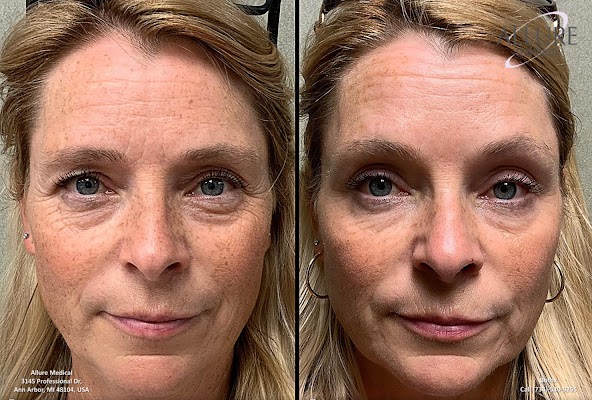
Botox before and after for smile line patterns shows a change in posture and motion, not a filled groove. The mouth corners sit more level. The chin texture smooths. The smile looks less strained. The botox results timeline is predictable. You start to feel softening at day three to five, full effect at two weeks, and the relaxation lasts about three to four months in the lower face. How long botox lasts depends on metabolism and the muscle’s baseline strength. Wearing off signs include a gradual return of the downward tug or chin dimpling toward month three or four. The botox maintenance schedule for the lower face often lives at three to four times per year, sometimes less if combined with filler correction.
Fillers are immediate. Swelling settles in a few days. Longevity varies by product and placement, commonly 9 to 18 months in the nasolabial and marionette zones. Deeper structural placement tends to last longer than superficial surface correction. Most patients maintain with small touch ups at 9 to 12 months rather than full reinjections.
The role of prevention and skin quality
Preventative botox makes sense in faces where repetitive motion is building creases, especially in the upper face. Around the mouth, prevention is more about habits and skin. Stop licking the lips. Address dental occlusion issues. Manage bruxism with a night guard and, if appropriate, masseter botox to reduce clenching. That can ease the mechanical forces that deepen lines. Skin health matters as well. Collagen-friendly routines and sun protection improve how the overlying skin drapes over the structures you restore with filler.
If you want a lighter touch, baby botox reduces dynamic stress without fully relaxing a muscle. Micro botox in the skin can refine texture and pores on the cheeks, but I keep it away from the lip border to avoid stiffness. These are refinements, not primary fixes for deep folds.
Safety, risks, and what a conservative plan looks like
Botox safety information is well established when injected by trained hands. The risks and benefits balance differently in the lower face where function is high stakes. The most common botox side effects include small bruises, tenderness, or a transient feeling of heaviness as you adapt. Rarely, diffusion can cause a crooked smile or lip incompetence, which resolves as the botox wears off. I mitigate by using minimal units, placing injections anatomically lateral, and spacing follow up for fine tuning rather than front loading a big dose.
Fillers carry their own risk profile. Bruising and swelling are common. The critical risk is intravascular injection. This is why cannula use, aspiration techniques, and a deep knowledge of perioral anatomy are non negotiable. Early detection of vascular compromise and access to hyaluronidase are essential. In the right hands, complications are rare, but they are never zero.
A conservative plan starts with a personalized botox plan that targets the dominant muscle pattern with low doses, paired with modest filler to correct structural shadow if present. A follow up at two weeks for botox and at two to four weeks for filler allows adjustments. Advanced botox techniques and anatomy based mapping keep the result precise, not broad.
Special situations I see often
Men often have stronger DAO and mentalis muscles and thicker skin. Botox for men around the mouth requires careful titration. I expect to use slightly higher units for effect, but still under tight control to preserve a natural, masculine expression. Men also benefit from addressing masseter hypertrophy when a square jawline and clenching contribute to lower face heaviness.
First time patients tend to request “just a touch” and worry about looking overdone. I prefer starting on the lighter end, showing you the change, then layering if needed. The botox consultation process includes having you animate in the chair so I can see the exact vectors that create your concern.
Facial asymmetry changes the plan. I may treat one side heavier at the DAO or mentalis to balance the pull. Likewise, uneven tooth wear patterns hint at unilateral clenching, which influences line depth and may point to botox for stress jaw on one side.
Aging cheeks with significant volume loss need midface support before fold filling. Fixing the fold alone without supporting the cheek often leads to overfilling and a doughy look. I explain this trade off and show how a small lift in the right spot takes pressure off the nasolabial area.
Skin laxity with etched-in lines benefits from a multimodal approach: collagen-stimulating treatments for texture, filler for structure, and select botox for motion. No single tool corrects all three layers.
My sequencing blueprint for common patterns
Smile-driven fold with neutral rest. Treat dynamics first. Small units to DAO and possibly mentalis or gummy smile elevators. Reassess at two to three weeks. If a faint shadow remains, add minimal filler to the fold.
Deep fold at rest with downward corners. Build support with midface filler if needed, then soften the fold itself. Return after two to four weeks to add a few units of botox to DAOs to keep corners level.
Pebbled chin and marionette shadows in a thin face. Low-dose botox to mentalis, then microthreaded filler to the labiomental crease and pre-jowl sulcus. This combination smooths texture and reduces shadow without bulk.
Asymmetric smile line. Target the stronger side’s pull with a slightly higher botox dose at the relevant muscle while placing balanced filler only if a static shadow persists. Check at two weeks for symmetry.
What about alternatives: Dysport and Xeomin
Botox vs Dysport vs Xeomin is less about dramatic differences and more about clinician preference and diffusion characteristics. All relax muscles via the same mechanism. Some physicians find Dysport spreads a bit more, which can be helpful or not depending on the zone. Xeomin lacks complexing proteins, which some prefer for repeat dosing or for patients who feel they get tachyphylaxis. If you tolerated botox well but saw a shorter duration, a trial with a sister product can be reasonable. The injection mapping and dose equivalence matter more than the brand.
Recovery and aftercare in the lower face
Botox recovery time is easy. You can return to normal activity right after treatment. I ask patients to stay upright for four hours and avoid heavy facial massages or facials for that day. Botox aftercare instructions also include gentle exercise of the injected muscle for a few minutes post treatment in some practices, though evidence is mixed. It does not harm when done lightly.
Fillers need more care in the first 48 hours. Expect swelling and mild tenderness. Ice in short intervals helps. Skip high heat, saunas, and vigorous workouts that day. Sleep with your head slightly elevated the first night. Monitor for unusual blanching, increasing pain, or changes in color and temperature, which warrant an urgent call. That is rare, but it is the one instruction I emphasize.
Long term planning and cost efficiency
A custom botox treatment plan is more cost effective over a year when it aligns to your actual pattern. Treating the wrong driver costs more because you chase the line without correcting its cause. For many, two to three small botox visits per year paired with one well planned filler session beats one big, sporadic overhaul. Small, steady maintenance preserves balance and prevents the need for aggressive correction later.
Botox long term effects, when dosed appropriately, include weaker habitual overuse and a softer resting face. Go here Muscles can atrophy slightly with repeated treatments, allowing longer intervals over time. This is desirable around the mouth only if function is preserved. This is why the lower face demands restraint.
Myths worth clearing
Botox fills lines. It does not. It relaxes muscles. Fillers fill.
You must treat the fold directly. Not always. Often the cheek, chin, or pre-jowl correction reduces the fold more elegantly.
You’ll look frozen. Not if the injector respects function and uses deliberate microdoses, especially in the lower face where speech and eating matter.
Smile lines are only about age. Genetics, dental bite, sun exposure, and muscle habits shape them at any age. I treat patients from late twenties with strong dynamics to seventies seeking structure and lift.
Preventative botox is only for the forehead. Strategic lower face use can prevent etched-in marionette lines by reducing chronic downward pull, provided dosing is conservative.
A practical checklist before you choose
- Identify whether your lines are dynamic, static, or mixed by watching your face at rest and in motion in bright light. Press and lift the cheek gently. If the fold evens out, volume support is needed. If it deepens with movement, muscle relaxation can help. Prioritize function. Any plan around the mouth should allow normal speech, eating, and smiling. Start low and stage. Build results over two visits rather than loading all at once. Reassess after each step. Let botox settle for two weeks and filler for two to four weeks before making the next decision.
A short case vignette to tie it together
A 44 year old woman came in pointing to deepening marionette shadows and a “sad mouth.” At rest, the corners sat slightly below the vermilion border, with a mild pre-jowl hollow. On animation, her DAOs fired strongly, pulling the corners down and in. The plan: 0.5 mL of flexible hyaluronic acid filler per side to the pre-jowl sulcus and labiomental angle to erase the shadow’s base, then a conservative 3 units of botox per side to the DAOs at a lateral, safe point. Two weeks later, the corners rested level, the shadow lifted, and speech felt normal. At three months, she returned, still liking the shape, and repeated the DAO dosing. We skipped more filler. Over a year, she used a total of 1 mL filler and three small botox visits. The result stayed consistent because we matched tools to causes and paced the plan.
Final thoughts from the chair
Choosing between botox vs fillers for smile lines is not a coin toss. It is an evaluation of movement, structure, and skin. Botox for muscle relaxation smooths the forces that carve creases. Filler restores the scaffolding that keeps skin draped in a gentle curve. When in doubt, test in the mirror. Do the lines soften when you lift the cheek or square the chin? Do they deepen when you smile or speak? Those clues, plus a clinician’s eye for anatomy, point to the right mix.
If you want a natural, durable change, keep to three principles. Use anatomy based treatment rather than chasing shadows. Dose lightly in the lower face and adjust at follow ups. Sequence the plan so each piece supports the next. That is the smile line strategy that holds up under conversation, photography, and time.